Table of Contents
Key Takeaways
- "Nature Deficit Disorder" is now a daily reality for millions of families — and intentional, active Green Time is the simplest and most accessible antidote.
- Unlike the flat, hyper-curated stimulation of screens, the outdoors delivers a rich 360-degree sensory diet — variable terrain, wind and shifting light — that developing brains need to thrive.
- Attention Restoration Theory shows natural environments create "soft fascination", letting the focused cognitive pathways exhausted by screens and video games rest and reset.
- Silent, eco-friendly electric balance bikes are the ideal bridge — thrilling enough to compete with digital dopamine, without the noise, pollution and intimidation of petrol bikes.
- Balance screens rather than banning them: schedule outdoor rides like a class, make trails tech-free zones, and start with short 15-minute park sessions before scaling up.
The modern family weekend looks vastly different than it did just two decades ago. The familiar neighborhood sounds of children playing until the streetlights come on have largely been replaced by the silent, mesmerizing glow of tablets, smartphones, and gaming consoles. While modern technology offers unprecedented educational and entertainment value, the passive, sedentary nature of digital consumption is taking a measurable toll on childhood development.
The concept of "Nature Deficit Disorder," a term coined by author Richard Louv, is no longer considered a fringe theory—it is a daily reality for millions of families globally. The antidote to this modern epidemic, however, is simpler and more accessible than we often think: intentional, active 'Green Time.'
1. The Sensory Diet of the Great Outdoors
Human biology evolved over millennia in direct contact with the natural world; we are simply not adapted for prolonged periods of sitting in temperature-controlled, artificially lit, two-dimensional environments. Children, whose brains are in a state of rapid plasticity, require a diverse and robust "sensory diet" to thrive emotionally and physically.
- Unregulated vs. Curated Inputs:A screen provides a highly curated, hyper-stimulating, yet physically flat experience. Conversely, the outdoor environment provides a rich tapestry of unregulated, 360-degree sensory inputs. The variable resistance of dirt beneath a bicycle tire, the unpredictability of a sudden gust of wind, the shifting, dappled sunlight filtering through the trees—these inputs force the brain to engage in complex, subconscious processing.
- Attention Restoration Theory (ART):When a child is navigating an outdoor trail, their brain is engaged in constant, low-level problem-solving. Environmental psychologists point to Attention Restoration Theory (ART), which suggests that exposure to natural environments encourages "soft fascination." This type of engagement allows the directed, focused cognitive pathways—the ones so easily exhausted by Zoom classes and fast-paced video games—to rest, recover, and reset.
2. The Ecological Bridge: Why E-Bikes Make Sense
For many well-intentioned parents, the primary challenge is not understanding thevalueof the outdoors, but rather finding themeansto make it engaging enough to compete with the instant dopamine hits of digital entertainment.
- Finding the 'Hook':Traditional bushwalking or neighborhood walks can sometimes fail to hold a screen-conditioned child's interest. On the other end of the spectrum, heavy, noisy, petrol-powered dirt bikes introduce significant issues: noise pollution, environmental degradation, and considerable safety and intimidation factors for young riders.
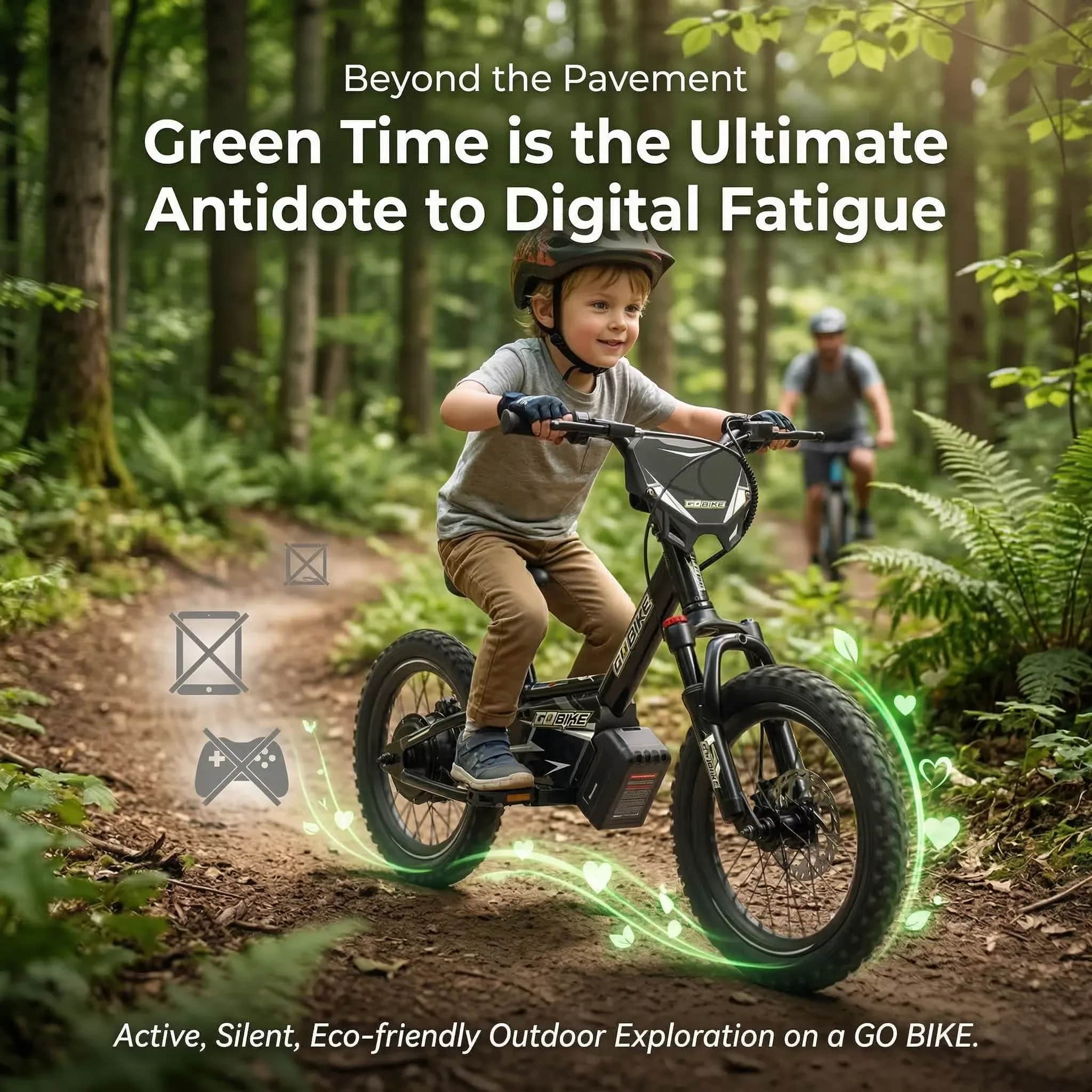
- Sustainable Thrills:The rise of silent, eco-friendly electric balance bikes offers the perfect ecological bridge. These bikes provide the genuine thrill and dynamic engagement necessary to tear kids away from their screens voluntarily. More importantly, they do so in a way that deeply respects the natural environment. A completely silent electric motor means a child can ride through a local state forest or a quiet camping ground without disturbing the local wildlife or fellow nature enthusiasts.
3. Cultivating Environmental Stewardship
There is a profound psychological difference between conquering nature and connecting with it. When a child rides a noisy, gas-powered machine, the environment becomes merely a backdrop for adrenaline. However, when a child glides silently along a trail on an electric balance bike, they remain a part of the ecosystem. They can hear the crunch of leaves, the call of birds, and the sound of their own breath. This quiet immersion fosters a deep, intuitive respect for the environment, laying the groundwork for lifelong environmental stewardship.
4. Actionable Steps for Mindful Parenting
The goal of prioritizing Green Time is not to banish screens entirely—an unrealistic and often counterproductive expectation in our deeply digitized world. The goal is to establish a healthy, sustainable balance. Here is how parents can start:
- Schedule It Like a Class:Treat outdoor trail riding or park visits with the same non-negotiable importance as a piano lesson or a soccer practice.
- Tech-Free Zones:Designate the trails as absolute tech-free zones. No smartphones, no digital distractions—just the bike, the trail, and the family.
- Start Small and Scale Up:Begin with 15-minute sessions at a local flat park to build confidence before graduating to more complex bush trails.
By actively introducing children to the joys of off-road, eco-friendly cycling, parents are gifting them far more than a fun afternoon. They are providing a powerful coping mechanism for modern stress, a vital tool for physical fitness, and a profound appreciation for the natural world. They are replacing the blue light of a screen with the healing green canopy of the outdoors, ensuring the next generation grows up resilient, connected, and deeply grounded in the real world.
Ready to start the adventure?
Shop Australia's best-rated electric bikes for kids. Built for safety, engineered for fun.
Shop All Bikes →
Gobike
GoBike Australia
Australia's leading provider of premium electric balance bikes for kids — getting children outside and building real confidence.
Leave a Comment
Be the First to Comment
Your email address will not be published. Comments may be moderated before appearing.